

How to Make the Most of a College Visit
A campus tour is only as useful as the preparation behind it.
Editor’s note: This post was updated following a reader conversation that compelled us to go deeper into faculty research and the questions families should be asking before and during a campus visit.
Every summer, we talk to families who’ve already done a few campus visits and are feeling less certain than before they left. The tours blur together, the course catalogues more or less look the same. The visit itself wasn’t the problem; the preparation was. Here are a few things we suggest along the way.
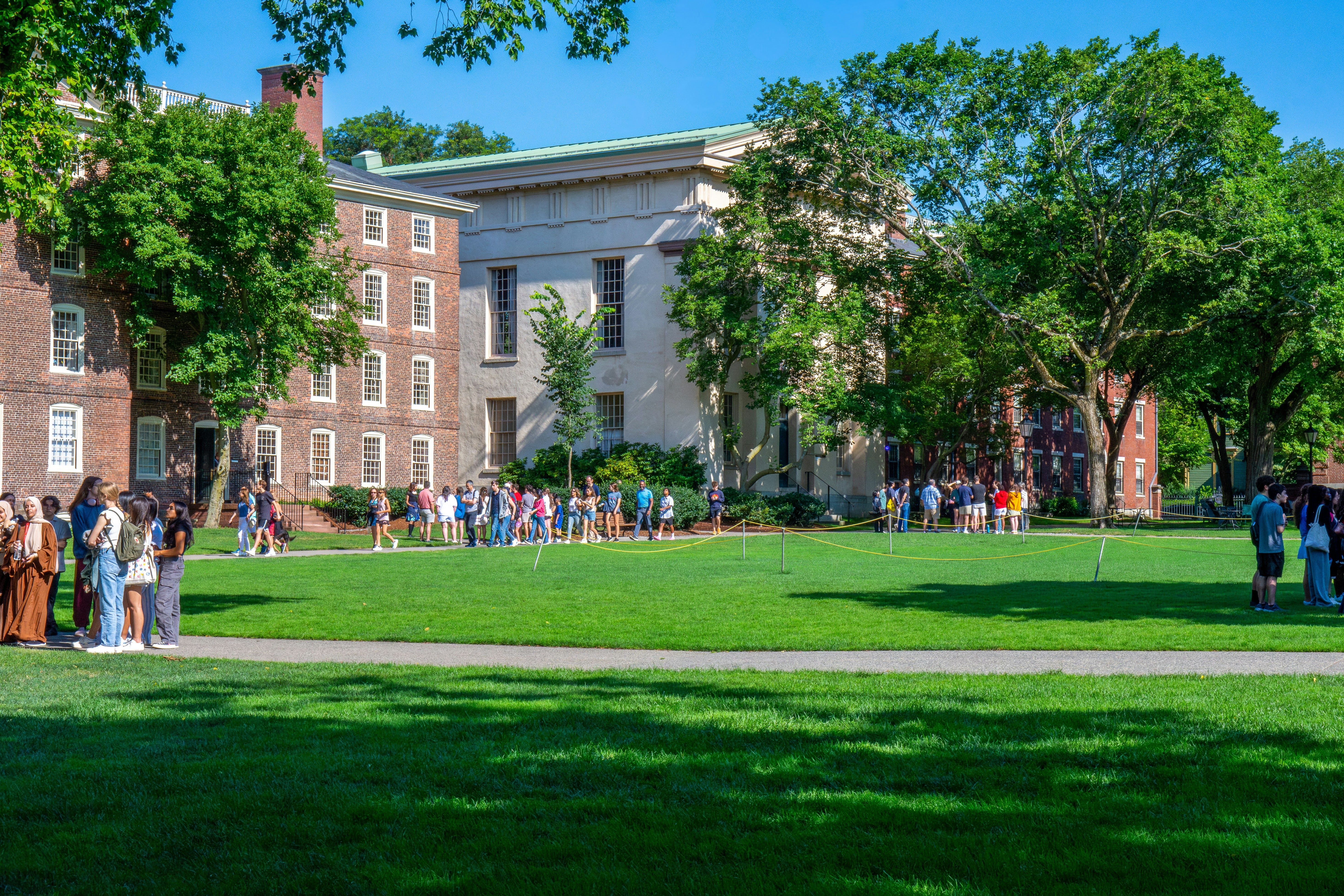
Summer is one of the most popular times to visit colleges, for good reason. Students are, for the most part, out of school, families have more flexibility and the window before application season is still ajar. What catches many families off guard is how little structure they bring to the experience. Showing up and hoping your student catches a vibe isn’t a plan. The families who leave a campus with a clear picture are the ones who treated the visit like an archaeological dig.
Here are some ways to help your student make it count.
Make It Official
If your student has a friend or family member enrolled at a school who has offered an insider’s tour, take them up on it. Just don’t let that replace the official tour through the admissions office. There are two reasons for this. First, demonstrated interest is a real factor at many schools. An officially logged visit is one of the most direct ways to register it.
Second, official tours are curated by the institution deliberately. What they choose to show you says something about what they value.
If time allows, do both. They serve different purposes.
Do the Homework Before You Arrive
The research that matters most happens before your student ever sets foot on campus. Rate My Professors, department websites, syllabi and course catalogs tell you a lot about who’s teaching and what the academic experience looks like from the school’s perspective. Reddit, specifically r/ApplyingToCollege, College Confidential and alumni LinkedIn profiles offer perspectives that no admissions office curates. “Why I transferred” videos on YouTube, not sanctioned by a college’s marketing department, are worth watching too.
Come to the visit informed. It makes every conversation one with depth. For a deeper look at what schools don't advertise about their faculty, teaching structures and AI policies, Hollis Robbins' Substack, Anecdotal Value, is a great place to start.
Interview The Tour Guide
Many families arrive at a campus visit with no questions prepared at all — and visits are often back-to-back, leaving little room to slow down. Two or three sharp questions matter more than a long list you’ll never get through.
The tour guide is a current student with current experience to share. Most families treat them as a navigation tool. They are much more useful than that.
A few questions worth coaching your student to ask:
How many of your core classes in your first two years were taught by a full professor versus a grad student or adjunct?
Did you ever have a professor who knew your name before you introduced yourself?
What surprised you most after you enrolled, academically speaking?
If you could do it over, would you choose this school again?
That last question is the most revealing. A happy student answers immediately. Pay attention to the hesitation as much as the answer — and pay attention to what they talk about when they stop reciting the script. The moment a tour guide goes off-talking points is the moment you start learning something real.
Collect contact information from anyone you have a meaningful conversation with, the tour guide included. It is useful for follow-up questions and, more importantly, the kind of specific detail that makes a supplemental essay feel genuine. Admissions officers notice when an essay references a real conversation with a real person.
Ask About Faculty Access
Swing by the department office for your student’s intended area of study and ask directly: what does undergraduate access to tenured faculty look like here? How large are introductory courses, and when do students transition to smaller seminars? What percentage of courses in the first two years are taught by full-time faculty versus graduate students or adjuncts? These are fair questions. A good admissions office answers them specifically. A deflection — “we have world-class faculty” or “our professors are very accessible” — is itself an answer. Note it.
The reliance on adjunct and contingent faculty at the undergraduate level is real and worth understanding. At many universities, introductory courses — the ones your student will take in their first two years — are disproportionately taught by instructors on short-term contracts with no job security and limited institutional standing. The degree varies by school, and there is virtually no publicly available data on teaching quality at the course level. Asking directly is the only way to know what you are paying for. Teaching quality in higher ed is higher ed’s dirtiest secret — and it has been for decades.
Get the Full Picture
Walk the campus end to end, not just the quad on the cover of the brochure. Look at the dorms, the dining halls, the gym and the spaces where students spend time outside of class. But look critically. A dorm that feels sterile or a common area where no one is actually gathered tells you something. So does a campus where students are heads-down and isolated versus one where people are visibly talking, studying together and moving with energy. You are not looking for perfection. You are looking for signs of life.
Then walk off campus. The surrounding neighborhood is part of the experience, especially at schools in more self-contained or rural settings. Is there a coffee shop where students actually go? Somewhere to decompress that isn’t another university building? For students who grew up in a city, a campus that ends abruptly at a “cornfield” is a big adjustment (think: Los Angeles to Williams; Chicago to Dartmouth). For students who need quiet, a campus in the middle of a dense urban core (i.e., Boise to Boston) can be equally disorienting. Neither is wrong. But finding out on deposit day is too late.
A note on summer visits: it should be obvious, but many professors and some administrative staff are not on campus in July and August. Plan accordingly and reach out ahead of time if meeting with faculty is a priority. Dartmouth is a notable exception. Sophomores are required to be on campus during the summer term, meaning the campus is in active academic session and gives visitors a genuine sense of the academic environment. Stanford and Northwestern, both on quarter systems, also tend to have more active summer campuses than semester schools, though enrollment is optional and varies. If possible, schedule a return visit during the academic year before your student commits. A campus in June and a campus in October are two different places.
Go Beyond “The Tour”
Every campus visit should yield two things: a clearer sense of fit and material your student can use in the application. The best supplemental essays are specific — a conversation with a professor, a program discovered from a current student, something noticed that no brochure mentions. That level of detail signals genuine interest and is harder to fabricate, which is exactly why admissions officers notice it.
The visit is also the only way to know if your student lights up on that campus — if the students seem happy, if it feels like somewhere they would want to spend four years. That is not a superficial concern. College is where a significant amount of growing up happens, and a student in the wrong environment will not thrive no matter how strong the faculty roster is. Fit and rigor are not in competition. The best outcome is a school that delivers both.
A campus visit is not just due diligence. When done well, it becomes part of the application itself.
Admissions Angle works with students as early as 8th grade to help them build an extracurricular profile that’s genuine, strategic and theirs. If you’re not sure how to start — or whether what your student is doing is enough — book a free discovery call with us.
Everything wrong in higher ed is here in the thinness of this advice "stop by the advising office for their intended department" and maybe sit in the class. NO. The lack of attention to who exactly is teaching your child is why universities can get away with underpaid and unqualified teachers. Unless parents and students start asking better questions on their campus visit, nothing will change. Sitting in class is fine but that puts the burden on the teacher, not the institution. Be interested in who is teaching, not the dining hall, or you'll get a poor education.
Great advice here--there's a lot going on at college campuses that the marketing department and the tour guides aren't telling parents.