

Old Game, New Angle
Why Gen Z's analog obsession with mahjong is building the skills that matter most, on and off the application.
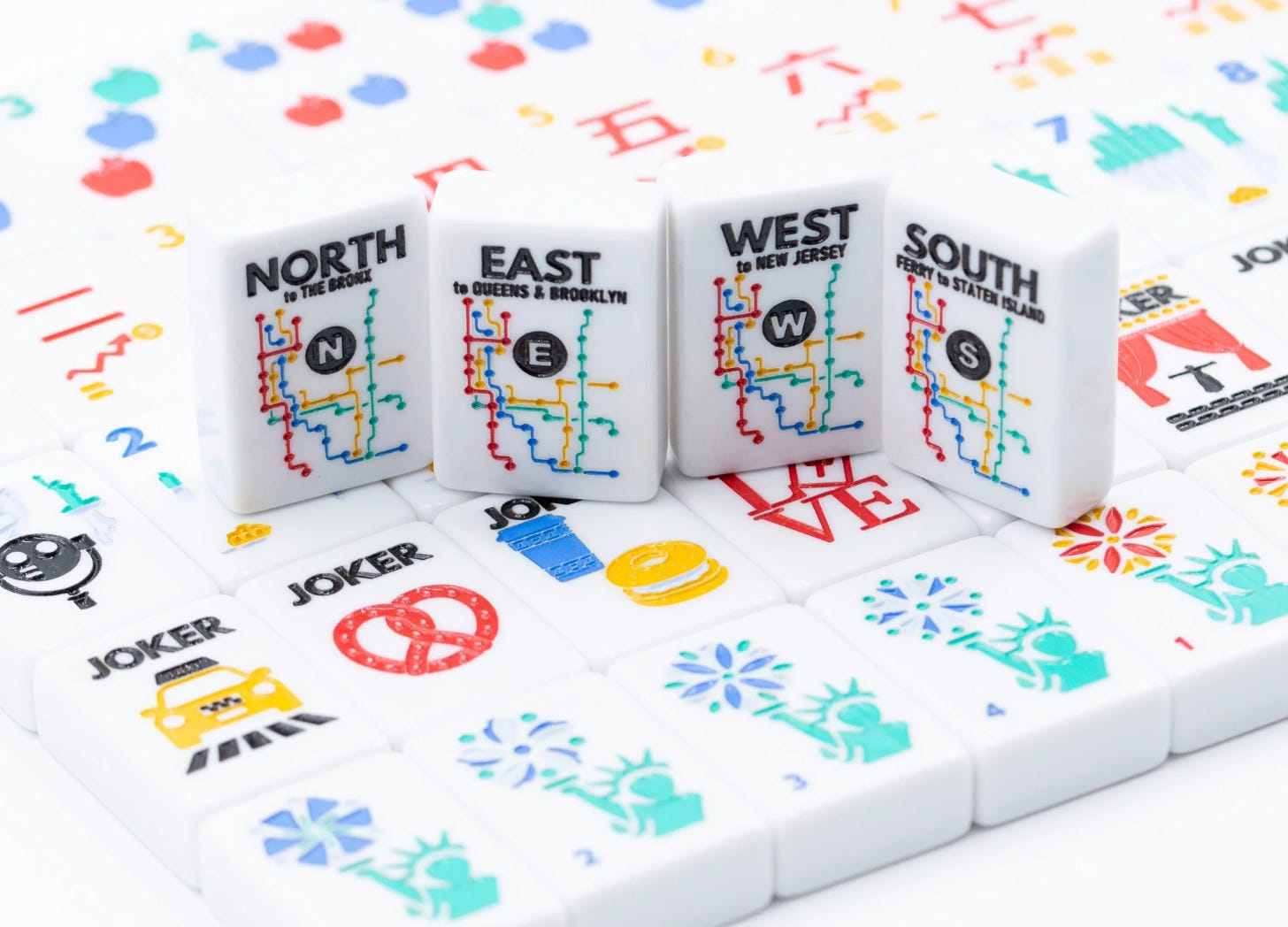
Mahjong has 144 tiles, no battery and zero notifications. It requires four players, a table and enough focus to track every discard your opponents make while protecting your own hand. The name itself, 麻雀, mā què, means sparrow in Chinese, a nod to the sound the tiles make when they click together. In America, mahjong has been mostly associated with a specific kind of afternoon: Jewish ladies in New York or Florida, a card from the National Mah Jongg League and a table full of people who knew each other well enough to play in intentional silence.
Now Gen Z is obsessed with it.
Yelp named mahjong a top trend of 2026, reporting that searches for mahjong clubs surged 4,467% year over year between fall 2024 and fall 2025, with searches for mahjong lessons up 819%. Eventbrite recorded a 179% increase in U.S.-based mahjong events from 2023 to 2024 alone. At George Washington University, students are spending weekends around the tile table, drawn to the game’s mix of competition, ritual and charm. San Francisco’s Youth Luck Leisure Mahjong Club draws up to 200 players per session, often with a waitlist. New York’s Green Tile Social Club has become a destination for younger players connecting with their cultural heritage, the New York Times reported.
@Antoine | 杰安 over at Mandarin Zest Magazine reported last week that mahjong-related content on TikTok has reached enormous scale, with search interest rising continuously — and that what was once associated with older Chinese communities has moved firmly into mainstream American social life, driven almost entirely by young people discovering it through clubs, classes and in-person events.
Writing in Business Insider this week, Gen Zer Amanda Geffner described how mahjong pulled her away from screens and into something she didn’t expect: a standing social ritual with her mom, cousin and family friends.
“Mahjong rewards patience instead of instant gratification,” she wrote. “It encourages real-life conversation over scrolling.”
The cultural history behind that pull runs deeper than the trend cycle suggests.
@Michelle Blaser explored the deep cultural roots of the game over at The Pollinatr — including how Jewish women in New York took up the game in the 1920s, eventually founding the National Mah Jongg League in 1937 to standardize rules and formalize what had become a genuine community institution. That history is not incidental to the current moment. For many young Asian-American and Jewish-American players, mahjong isn’t necessarily a trendy new hobby, but a thread back to something that was always theirs.
Japan is where the trend among young people is furthest along. A Japan Productivity Center report found that 17.6% of male teens and 9% of female teens played mahjong at least once in 2023, the highest rate of any age bracket. Since then, teen participation roughly doubling in just two to three years.
The wave has spread to South Korea, where the education race begins before children can talk, and our work in Seoul has allowed us to see this first-hand. Parents seek to secure spots at elite preschools long before their kids can even go, and teens hop from high school classes to after-school “cram centers” called hagwons. The Suneung, South Korea’s national college entrance exam, isn’t just an academic assessment, it’s akin to a societal ritual. One so consuming that the entire country rallies around it, with companies staggering work schedules, construction coming to a stop and airports grounding flights during a particular section. These are the students gravitating toward mahjong. The fact tthat the most academically pressured teenagers in the world are choosing a strategy game instead of checking out entirely says something.
Much of the mahjong digital gateway runs through Mahjong Soul, a free-to-play online platform that faithfully recreates the rules and mechanics of riichi mahjong while wrapping them in anime-style characters. Herin lies the entry point for a generation that grew up gaming. The physical tiles came later and the critical thinking skills came with both.
The actual mahjong sets themselves have become objects of desire and the mahjong market is split in two. On the higher end, Oh My Mahjong has turned the tile table into a lifestyle “event”, with sets running from $400 to over $600, sold at Revolve. And then there’s Prada’s set, which costs $7,800!


On the accessible, design-forward end, brands like My Fair Mahjong, whose destination-themed, brightly colored sets are sold at Dillard's, and The Mahjong Line, known for its bold artwork and color-coded tiles, are making the game feel young, personal and worth owning.
The set on your table has become a signal. Like a tennis racket in the 80s or a Peloton in 2020, the mahjong set someone owns says something about who they are — tapped in and culturally fluent. That calculus has pushed the market in two directions simultaneously: toward the aspirational and toward the expressive.
Town & Country noted tiles are "clacking in the well-decorated homes of the urban elite." When Prada is selling you a mahjong set and Dillard's is stocking the colorful version for everyone else, the trend has officially crossed over.”
144 Tiles. No Easy Moves.
The trend is interesting, but what's happening cognitively at the mahjong table is more interesting.
Keep reading with a 7-day free trial
Subscribe to Admissions Angle to keep reading this post and get 7 days of free access to the full post archives.